
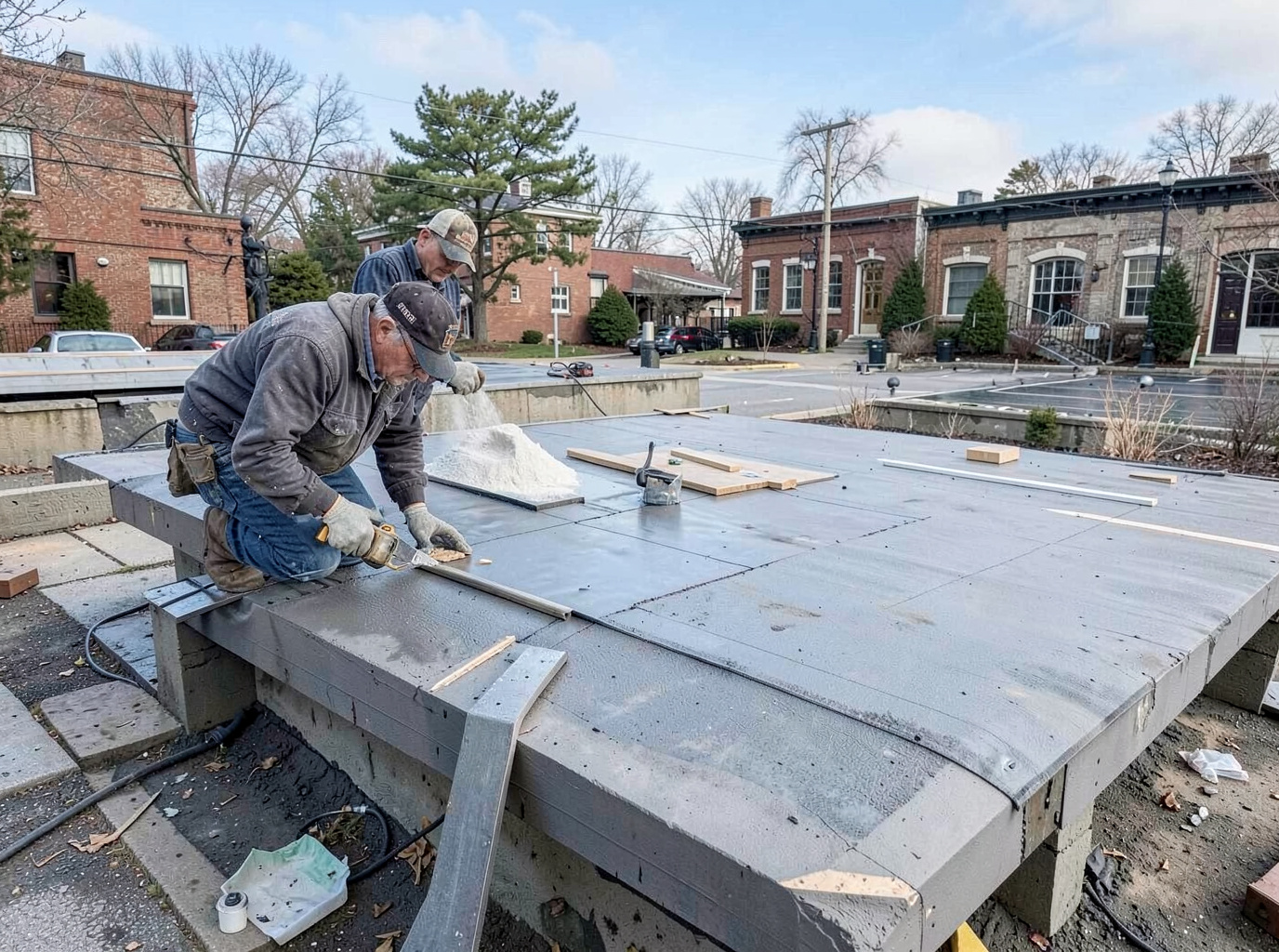
Flat roof replacement is needed when a low-slope roof ponds, blisters or leaks and the membrane has outlived its drainage. Rowhouse, rear-addition and porch roofs that hold water after rain are the focus here, with the membrane and drainage questions to settle before you take bids. Call (410) 438-1686 and describe where water sits.
Why ponding matters
Water that stays on a low-slope roof for a couple of days after rain is ponding, and it shortens the life of the membrane. Low-slope roofs need enough fall to carry water to a drain or scuppers. If your roof holds water for days, the replacement scope should say how the water will leave: tapered insulation, new drains or a changed slope.
Compare the membranes
- TPO: heat-welded seams. Ask which manufacturer specification is followed.
- EPDM: adhesive or tape seams, or mechanical fastening. Ask how seams and flashings are sealed.
- Modified bitumen: layered, torch or self-adhered. Ask how the substrate is prepared and how fire risk is managed.
Drainage decides the outcome
Before accepting a quote, ask where the water goes: slope toward drains or scuppers, whether tapered insulation is proposed, and how edges and wall flashings are detailed. Soft spots underfoot and blistering are signs the system, not just the surface, is failing. Manufacturers publish their own installation and warranty requirements, so ask which system each bidder is quoting.
What a complete flat roof scope includes
A complete scope names the tear-off or recover method, the insulation, any tapered layers, the membrane and its thickness, the seam method, the edge metal, the wall flashings and the drain or scuppers. It also states the deck allowance, since soft decking is typically found only after tear-off. Ask whether the roof is to be removed to the deck or covered, and why. A written reason is more useful than a verbal assurance.
Signs yours has outlived its membrane
Water that stays after dry days, blisters, open seams, cracking at the edges and soft spots underfoot are typical signs. A stain inside does not locate the failure, because water can travel along the deck before it appears. Photograph the roof after rain, note how long water remains, and show those photos to each bidder. That gives every bid the same starting evidence and exposes proposals that ignore drainage.
Rowhouses and additions
Brick rowhouses such as those in Rodgers Forge often have a low-slope section between party walls, so access and wall flashing matter. Weigh winter conditions using how snow and ice affect planning, and if the deck is soft read roof deck replacement. Larger buildings are covered under commercial roof replacement, and owners in Pikesville can use the same drainage questions.
Technician insight
On low-slope roofs, drainage and flashing details usually decide how long a membrane lasts more than the membrane brand does.
Flat Roof Replacement Services We Offer
✓TPO Flat Roof Replacement
TPO membrane systems with a reflective surface.
✓EPDM Flat Roof Replacement
EPDM rubber membrane systems for flat and low-slope roofs.
✓Modified Bitumen Roof Replacement
Multi-ply modified bitumen systems.
✓Flat Roof Deck and Insulation Replacement
Replacement of damaged decking and insulation before the new membrane goes on.
✓Residential Flat Roof Replacement
Flat roof replacement for homes, addressing drainage and detailing.
How it works
- 1
Inspection & Quote
We inspect the flat roof, discuss material options and provide a written quote.
- 2
Old Roof Removal & Deck Preparation
The existing system is removed and the deck is inspected, with damaged areas replaced.
- 3
Insulation & Membrane Installation
New insulation and the chosen membrane are installed, with sealed seams and flashing at penetrations.
- 4
Drainage & Cleanup
Drains and scuppers are checked to help prevent ponding, and the work area is cleaned.
Pricing
We give a written quote after inspection; the price depends on the roof, the materials and access.